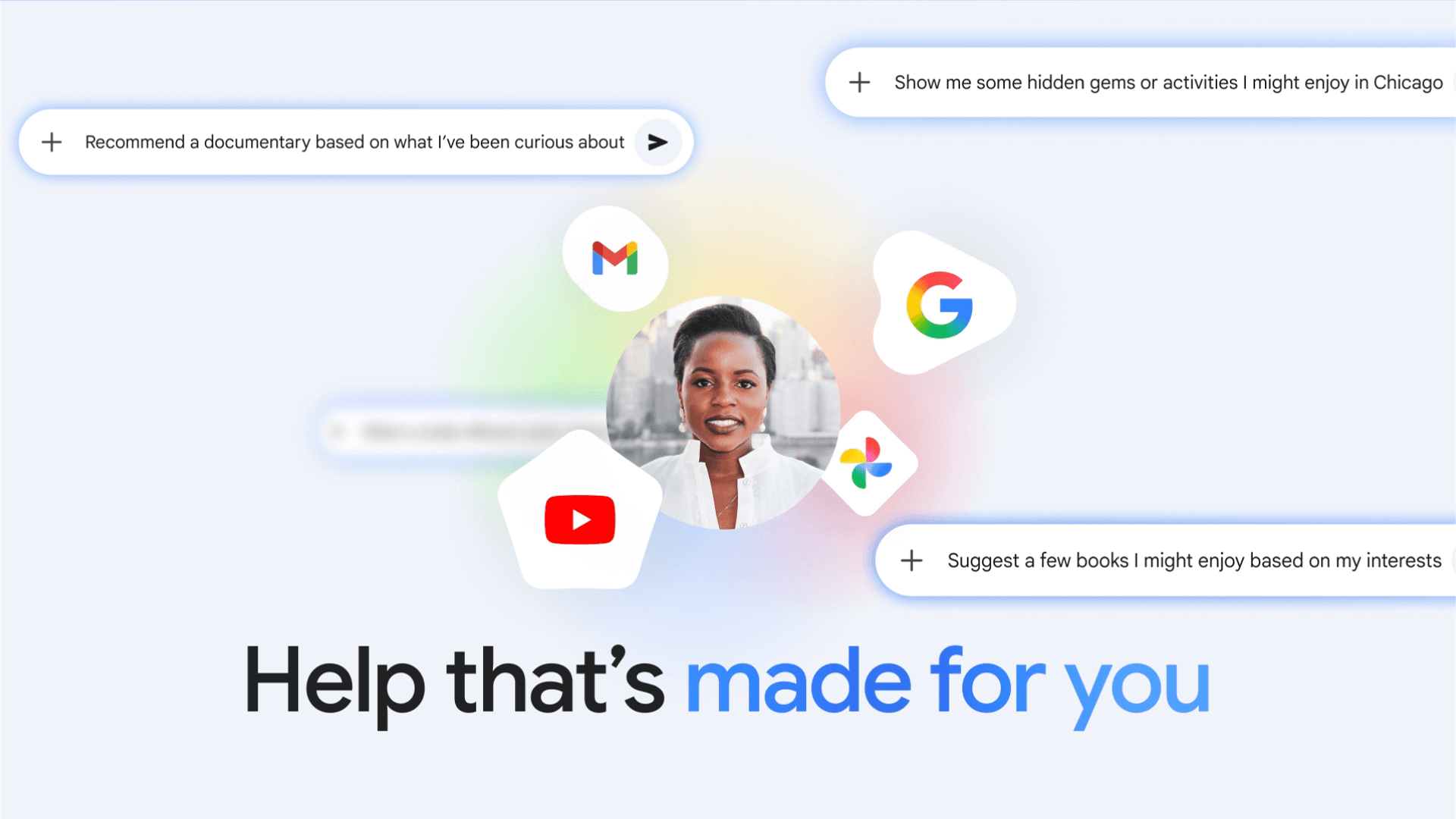
The new capability, released in beta on January 14 to Google AI Pro and AI Ultra subscribers in the U.S., allows Gemini to reason across a user's data and surface proactive insights. While Gemini could previously retrieve information from these apps, Personal Intelligence enables it to understand context and make connections across your entire digital ecosystem.
"This moves AI toward a new era of Personal Intelligence," Google announced. "Gemini can now help you recall where you saved that document, suggest restaurants based on places you've searched, or find photos from a specific trip—all by understanding your personal context."
The integration extends to Chrome, which received major new features built on Gemini 3, including an auto-browse feature that handles complex, multi-step tasks like booking travel or scheduling appointments entirely on the user's behalf. Gmail now offers AI-powered features like "Help me write," AI Overviews in search results, and personalized suggested replies at no cost to all users.
Google One AI Ultra and Pro subscribers gain access to advanced features including AI Overviews in Gmail search and an enhanced Proofread tool. The company emphasized that all personal data connections are secured and users maintain full control over which apps Gemini can access.